logo
Good price  online

products details

Created with Pixso. Home Created with Pixso. Products Created with Pixso.
Sapphire Optical Windows
Created with Pixso.

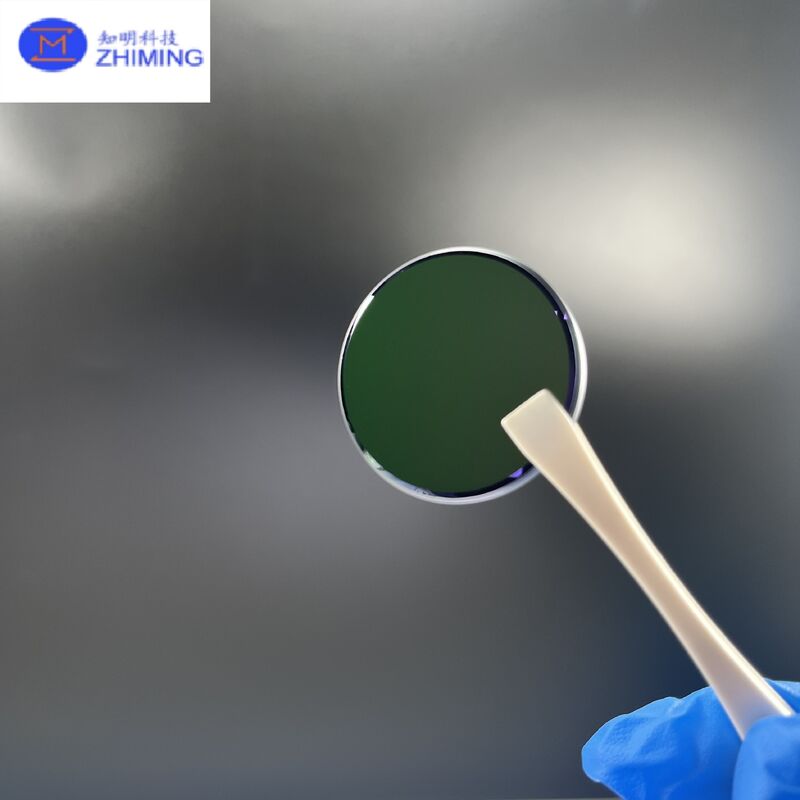
Silicon (Si) Lens with IR Anti-Reflection Coating

Silicon (Si) Lens with IR Anti-Reflection Coating

Brand Name: ZMSH
MOQ: 1
Price: by case
Packaging Details: custom cartons
Payment Terms: T/T
Detail Information
Place of Origin:
China
Supply Ability:
By case
Product Description

Silicon (Si) Lens with IR Anti-Reflection Coating

Product Overview

Silicon (Si) lenses with IR anti-reflection (AR) coating are high-performance optical components designed for mid-wave and long-wave infrared optical systems. By combining optical-grade single crystal silicon with precisely engineered infrared AR coatings, these lenses significantly reduce surface reflection losses and enhance overall system transmission efficiency.


Silicon lenses are widely used in infrared imaging, thermal cameras, infrared sensing, and industrial inspection systems due to their excellent thermal stability, mechanical strength, and reliable infrared optical performance. With IR AR coating applied, silicon lenses provide improved contrast, higher signal-to-noise ratio, and superior optical efficiency in demanding infrared applications.


Infrared Optical Properties of Silicon

Silicon is a well-established infrared optical material with stable and high transmission in the 1.2–8 μm wavelength range, making it particularly suitable for 3–5 μm (MWIR) infrared applications.

Compared with other infrared materials, silicon lenses offer several important advantages:

  • High mechanical strength and excellent durability

  • Good thermal conductivity for efficient heat dissipation

  • Lower density and lighter weight compared to germanium lenses

  • Stable chemical properties suitable for harsh environments

  • Mature manufacturing processes enabling high-precision polishing

These characteristics make silicon lenses an ideal choice for infrared systems requiring long-term stability and reliable performance.


IR Anti-Reflection Coating Technology

Bare silicon surfaces have relatively high Fresnel reflection in the infrared region due to their high refractive index. To maximize infrared transmission, IR anti-reflection coatings are applied to the lens surfaces.

Key benefits of IR AR coating include:

  • Significant reduction of surface reflection losses

  • Increased total lens transmission efficiency

  • Improved image contrast and system sensitivity

  • Reduced stray light and optical interference

The IR AR coating can be optimized for specific wavelength ranges, including:

  • 3–5 μm mid-wave infrared (MWIR)

  • 8–12 μm long-wave infrared (LWIR)

  • Custom-designed infrared wavelength bands

The coatings feature strong adhesion, good environmental resistance, and long-term stability, making them suitable for industrial-grade and high-reliability infrared optical systems.


Lens Types and Manufacturing Capabilities

We offer a wide range of silicon lenses with IR anti-reflection coating, including:

  • Plano-convex, bi-convex, plano-concave, and bi-concave silicon lenses

  • Spherical and custom aspherical silicon lenses

  • Single-side or double-side IR AR coating

  • High-precision optical polishing with excellent surface quality

  • Tight control of focal length, thickness, and surface accuracy

Custom manufacturing is available to meet specific optical design requirements, including lens diameter, curvature, tolerance, and coating performance.


Typical Applications

Silicon lenses with IR AR coating are widely used in:

  • Thermal imaging and infrared camera systems

  • Infrared temperature measurement and sensing devices

  • Industrial infrared inspection and monitoring

  • Infrared spectroscopy and scientific research equipment

  • High-power infrared laser and optical transmission systems

In these applications, silicon lenses with IR anti-reflection coating play a critical role in improving optical efficiency and system reliability.


Key Advantages

  • High infrared transmission efficiency

  • Excellent thermal and mechanical stability

  • Optimized IR anti-reflection coating performance

  • Reduced optical losses and improved imaging quality

  • Custom design support and stable volume production