logo
Good price  online

products details

Created with Pixso. Home Created with Pixso. Products Created with Pixso.
Scientific Lab Equipment
Created with Pixso.

SiC Seed Coating–Bonding–Sintering Integrated Solution

SiC Seed Coating–Bonding–Sintering Integrated Solution

Brand Name: ZMSH
MOQ: 1
Price: by case
Packaging Details: custom cartons
Payment Terms: T/T
Detail Information
Place of Origin:
China
Process Flow:
Automatic Spray Coating & Bonding Machine → SiC Sintering Furnace
Typical Use:
Production Scaling, Stable Cycle Time, Reduced Operator Variability
Applicable Interfaces:
Seed/Wafer, Graphite Paper, Graphite Plate
Coating Method:
Automated Spray Coating (integrated)
Pressing Method:
Controlled Pressing (integrated; Airbag/automated)
Temperature Control:
Adjustable
Supply Ability:
By case
Product Description

SiC Seed Coating–Bonding–Sintering Integrated Solution
 

Precision Spray Coating • Center Alignment Bonding • Vacuum Debubbling • Carbonization/Sintering Consolidation

Transform SiC seed bonding from operator-dependent work into a repeatable, parameter-driven process: controlled adhesive layer thickness, center alignment with airbag pressing, vacuum debubbling, and temperature/pressure-adjustable carbonization consolidation. Built for 6/8/12-inch production scenarios.

SiC Seed Coating–Bonding–Sintering Integrated Solution 0

  1. Product Overview

What it is
 

This integrated solution is designed for the upstream step of SiC crystal growth where the seed/wafer is bonded to graphite paper/graphite plate (and related interfaces). It closes the process loop across:
 

Coating (spray adhesive) → Bonding (alignment + pressing + vacuum debubbling) → Sintering/Carbonization (consolidation & curing)


By controlling adhesive formation, bubble removal, and final consolidation as one chain, the solution improves consistency, manufacturability, and scalability.


SiC Seed Coating–Bonding–Sintering Integrated Solution 1


Configuration Options


A. Semi-automatic line
SiC Spray Coating Machine → SiC Bonding Machine → SiC Sintering Furnace


B. Fully automatic line
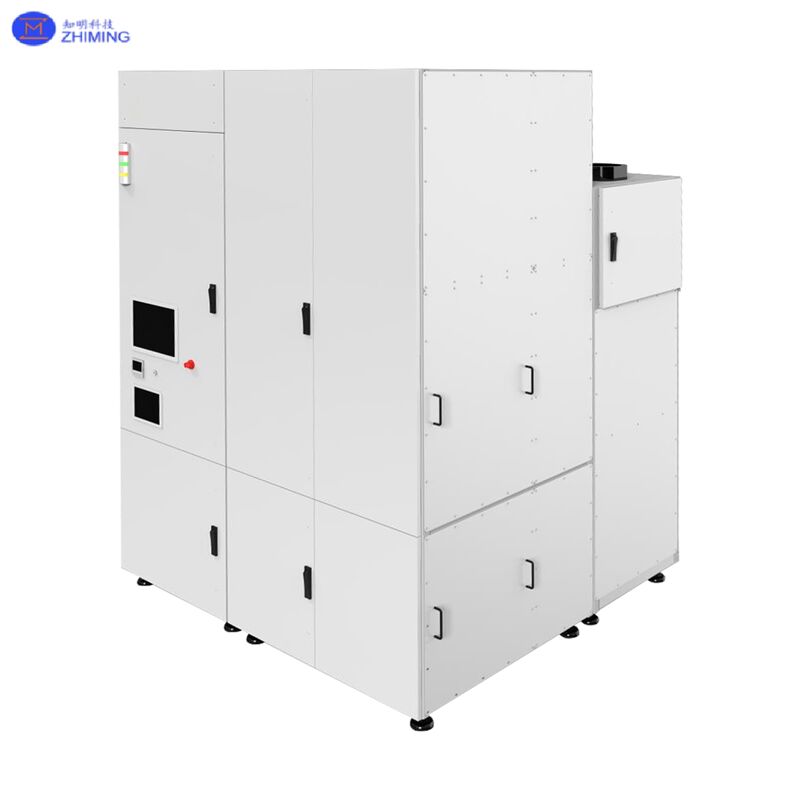
Automatic Spray Coating & Bonding Machine → SiC Sintering Furnace
Optional integrations: robotic handling, calibration/alignment, ID reading, bubble detection


SiC Seed Coating–Bonding–Sintering Integrated Solution 2


Key Benefits


• Controlled adhesive layer thickness and coverage for improved repeatability
• Center alignment and airbag pressing for consistent contact and pressure distribution
• Vacuum debubbling to reduce bubbles/voids inside the adhesive layer
• Adjustable temperature/pressure carbonization consolidation to stabilize the final bond
• Automation options for stable cycle time, traceability, and in-line quality control


  1. Principle

Why traditional methods struggle
Seed bonding performance is typically limited by three linked variables:

  1. Adhesive layer consistency (thickness and uniformity)

  2. Bubble/void control (air trapped in the adhesive layer)

  3. Post-bond stability after curing/carbonization

Manual coating commonly leads to thickness inconsistency, difficult debubbling, higher internal void risk, possible scratching of graphite surfaces, and poor scalability for mass production.


Spin coating can produce unstable thickness due to adhesive flow behavior, surface tension, and centrifugal force. It may also face side contamination and fixturing constraints on graphite paper/plates, and can be difficult for adhesives with solid content to coat uniformly.


SiC Seed Coating–Bonding–Sintering Integrated Solution 3


How the integrated approach works


Coating: Spray coating forms a more controllable adhesive layer thickness and coverage on target surfaces (seed/wafer, graphite paper/plate).


Bonding: Center alignment + airbag pressing supports consistent contact; vacuum debubbling reduces trapped air, bubbles, and voids in the adhesive layer.


Sintering/Carbonization: High-temperature consolidation with adjustable temperature and pressure stabilizes the final bonded interface, targeting bubble-free and uniform pressing results.


Reference performance statement
Carbonization bonding yield can reach 90%+ (process reference). Typical bonding yield references are listed in the Classic Cases section.


  1. Process

A. Semi-automatic Workflow


Step 1 — Spray Coating (Coating)
Apply adhesive via spray coating to target surfaces to achieve stable thickness and uniform coverage.


Step 2 — Alignment & Bonding (Bonding)
Perform center alignment, apply airbag pressing, and use vacuum debubbling to remove trapped air in the adhesive layer.


Step 3 — Carbonization Consolidation (Sintering/Carbonization)
Transfer bonded parts into the sintering furnace and run high-temperature carbonization consolidation with adjustable temperature and pressure to stabilize the final bond.


B. Fully Automatic Workflow


The automatic spray coating & bonding machine integrates coating and bonding actions and can include robotic handling and calibration. In-line options can include ID reading and bubble detection for traceability and quality control. Parts then proceed to the sintering furnace for carbonization consolidation.


Process route flexibility
Depending on interface materials and preferred practice, the system can support different coating sequences and single-side or double-side spray routes while maintaining the same objective: stable adhesive layer → effective debubbling → uniform consolidation.

SiC Seed Coating–Bonding–Sintering Integrated Solution 4

  1. Applications

Primary application
SiC crystal growth upstream seed bonding: bonding seed/wafer to graphite paper/graphite plate and related interfaces, followed by carbonization consolidation.

Size scenarios
Supports 6/8/12-inch bonding applications via configuration selection and validated process routing.

Typical fit indicators
• Manual coating causes thickness variability, bubbles/voids, scratches, and inconsistent yield
• Spin coating thickness is unstable or difficult on graphite paper/plates; side contamination/fixturing limitations exist
• You need scalable manufacturing with tighter repeatability and lower operator dependence
• You want automation, traceability, and in-line QC options (ID + bubble detection)

SiC Seed Coating–Bonding–Sintering Integrated Solution 5

  1. Classic Cases (Typical Results)

Note: The following are typical reference data / process references. Actual performance depends on adhesive system, incoming material conditions, validated process window, and inspection standards.


Case 1 — 6/8-inch Seed Bonding (Throughput & Yield Reference)
No graphite plate: 6 pcs/unit/day
With graphite plate: 2.5 pcs/unit/day
Bonding yield: ≥95%


Case 2 — 12-inch Seed Bonding (Throughput & Yield Reference)
No graphite plate: 5 pcs/unit/day
With graphite plate: 2 pcs/unit/day
Bonding yield: ≥95%


Case 3 — Carbonization Consolidation Yield Reference
Carbonization bonding yield: 90%+ (process reference)
Target outcome: bubble-free and uniform pressing results (subject to validation and inspection criteria)

  1. Q&A (FAQ)

Q1: What is the core problem this solution addresses?
A: It stabilizes seed bonding by controlling adhesive thickness/coverage, debubbling performance, and post-bond consolidation—turning a skill-dependent step into a repeatable manufacturing process.


Q2: Why does manual coating often lead to bubbles/voids?
A: Manual methods struggle to maintain consistent thickness, making debubbling harder and increasing trapped air risk. They may also scratch graphite surfaces and are difficult to standardize at volume.


Q3: Why can spin coating be unstable for this application?
A: Thickness is sensitive to adhesive flow behavior, surface tension, and centrifugal force. Graphite paper/plate coating can be constrained by fixturing and side contamination risk, and adhesives with solid content can be difficult to uniformly spin coat.